
Class is Shining
Dear Grammar 2 Parents,
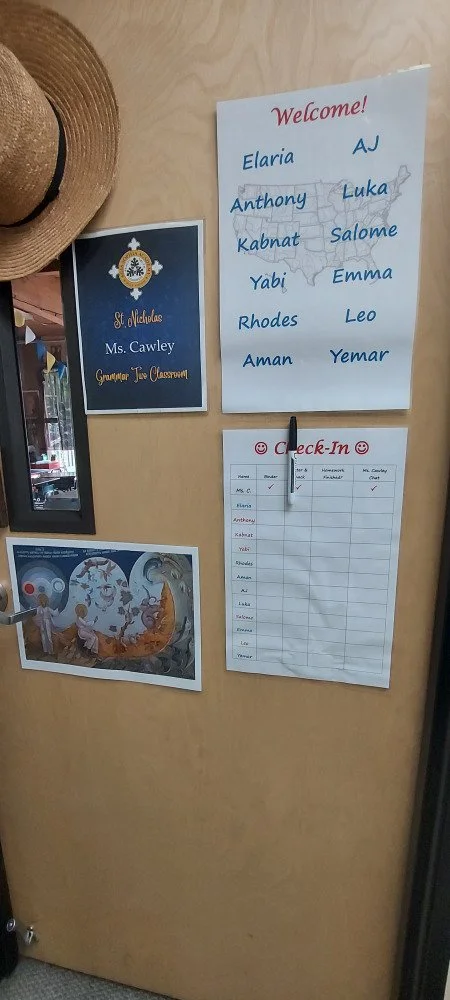
We are doubly blessed and growing into our new school year: new for many, and familiar for some. Welcome back, AJ, Anthony, Emma, Salome, and Yabi! Welcome, Elaria, Kabnat, Rhodes, Aman, Luka, Leo, and Yemar! Our new students are blessed to have strong role models and class leaders from last year. Thank you, AJ, Anthony, Emma, Salome, and Yabi, for being willing leaders when needed. You have modeled what it means to do your class job with integrity, how to show up ready with your binders, what it looks like to walk through the halls respectfully, how to use break times well and clean up afterward, and how to be willing to help tutor others when you have finished your assignment.
A-DAYS: Our Monday, Wednesday, Friday Schedule and Academics
This year our school has divided the week into A-Days and B-Days. The immersion in our classroom has been a tremendous gift. Instead of our time being punctuated and interrupted by transitioning and shifting between several classes in the day, we are able to truly sink our teeth into our lessons. I have noticed that the children are given time to reflect, ask good questions, and get good one-on-one time with the teacher as needed.
8:30 AM In-Class Good Morning Check-In
8:35 AM Math
8:50 AM Brief Morning Snack and Refresh Break
10:00 AM Reading, Vocabulary, Comprehension Work (10:00–10:30 AM on Fridays Only: School-Wide Sophie Time)
11:00 AM Spelling, Dictation, Cursive Handwriting
11:55 AM RECESS
12:25 PM LUNCH
1:00 PM Faith (Mondays); 2:20 PM Faith (Wednesdays, Fridays)
1:20 PM Afternoon Run and Stretch
1:30 PM Writing
2:00 PM Geography and History
2:45 PM Homework Organization
As you can see, the students are fully immersed in reading, writing, and arithmetic. I love it!
We have two groups of math students: GREEN and PURPLE.
Some students shift into other classrooms to work at the level of challenge suitable for them. In math, the whole class has been working on place value. We begin the day with a whole-group review before dividing into individual math sections.
The GREEN group has been challenged to round numbers to the tens, hundreds, and thousands places, and some are taking up the gauntlet to stay in step with the PURPLE group when challenged to round up to the millions! The PURPLE group is embarking on factors, prime and composite numbers, and multiples.
We have two groups of reading students: RED and BLUE.
Our first books have included Pocahontas, The Courage of Sarah Noble, and The Matchlock Gun. Each of these books is anchored in history to help us understand some of the perspectives of early life in America during the transitional time of colonialism. Each protagonist has a different relationship to the Indigenous peoples. We have had some good and some difficult discussions about these relationships.
Our RED group consists of students who are new to our classroom. They made an attempt at their first comprehension work, which is a series of questions to help challenge and gauge their thinking about the text. This first assessment helped me understand their thinking and writing skills. The RED group was aided by learning how to answer these questions in writing and how to scan a text to search for clues.
Our BLUE group completed all of the comprehension work independently. I was able to share with the RED group that by the end of the year, when they are given comprehension work, they, too, will be able to complete their work like this group. It’s good for the students who are new to the classroom to have a vision.
We have two groups of spelling students: PINK and YELLOW. Most of our students are in the PINK group. The YELLOW group is at an advanced level. I pull some extra-credit words for the PINK group from this list for their spelling assessment on Fridays.
Both the PINK and YELLOW groups use their spelling to practice grammar concepts. For example, this week students get to use their spelling words to form imperative sentences to help solidify their understanding of this grammar concept. The YELLOW group is additionally required to look up the definitions of the words. On the HOMEWORK SHEET, the YELLOW words are in the inset box.
We have two groups of handwriting students: SILVER and GOLD.
The SILVER group is practicing their cursive, and the GOLD group is perfecting it. Here is an article that explains the benefits of children writing in cursive instead of keyboarding. My class is essentially device-free.
https://scienceinsights.org/does-cursive-writing-help-the-brain-what-science-shows/
In terms of listening skills, all students do the same dictation work regardless of level. The one caveat is that last year’s students do their work in cursive. We have transcribed the poem “Little Things” and analyzed its poetic structure. The kids love to find patterns, and poetry is a lovely way to introduce this detective work.
Our faith studies vary depending on the day of the week:
MONDAY: Memory Work, Monks, and Monasteries
TUESDAY: Saints and Icons
WEDNESDAY: Frs. Basil and Matthew!!
THURSDAY: A Child’s Catechism
FRIDAY: The Gospel of Luke
We have two groups in composition: WRITERS and AUTHORS. Our WRITERS are new to the classroom and are honing English grammar rules. This includes parts of speech and reviewing the proper sentence structure they were taught last year. Our AUTHORS are writing paragraphs. They have written a summary paragraph on Pocahontas and one paragraph on the forms of energy.
Once a month, we have a WRITERS’ SYMPOSIUM. This is a half hour dedicated simply to writing stories. After discussing elements such as setting, protagonists, conflict, climax, and resolution, we meandered outside to write a story inspired by St. Paisios’s and Fr. Basil’s teachings on the bee and the fly. See photos at end.r
Ask your child about the Bee and the Fly. At the end of the symposium time, most students did not want to stop, and some earnestly asked to take their composition books home to finish.
We ALL study history and geography together.
Our first quarter is focused on Early American History, so we are learning about the colonies and the development of the nation: the colonies, the Revolutionary War, the U.S. Constitution, and the structure of government. Last week we discussed the Enlightenment ideas in Isaac Newton’s and John Locke’s work. My goal is for the kids to be able to trace the transition from absolute monarchies to constitutional monarchies to commonwealth ideas of contract to the formation of our U.S. Constitution.
William Penn (also known as AJ) established his Pennsylvania colony based on the Quaker ideal of equal rights. Each student chose a colony, and each is working on a map of that colony (state) to learn about its primary bodies of water and topography, its capital and cities, which colonies (states) it borders, and the resources in the New England, Middle, or Southern Colonies.
Our New England Colonies consist of: Rhodes (Massachusetts), Aman (Connecticut), Elaria (New Hampshire), and Luka (Rhode Island).
Our Middle Colonies consist of: Anthony (New York), Salome (New Jersey), AJ (Pennsylvania), and Kabnat (Delaware).
Our Southern Colonies consist of: Yemar (Maryland), Yabi (Georgia), and Leo (South Carolina).
Emma has her pick between Virginia and North Carolina.
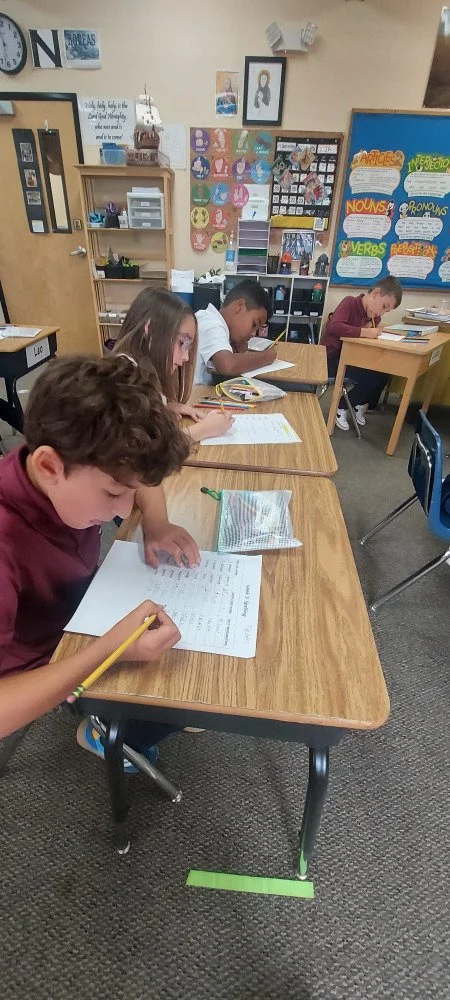
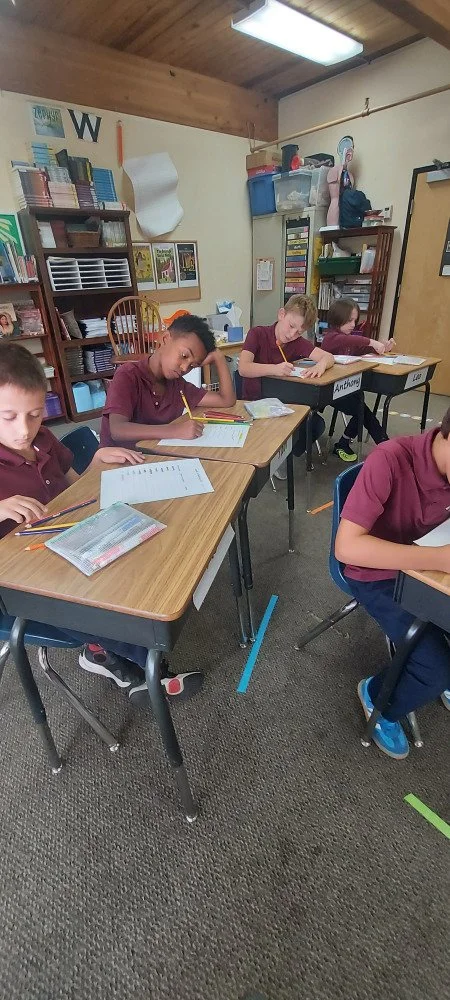
Row 2 knocking it out of the park with their focus
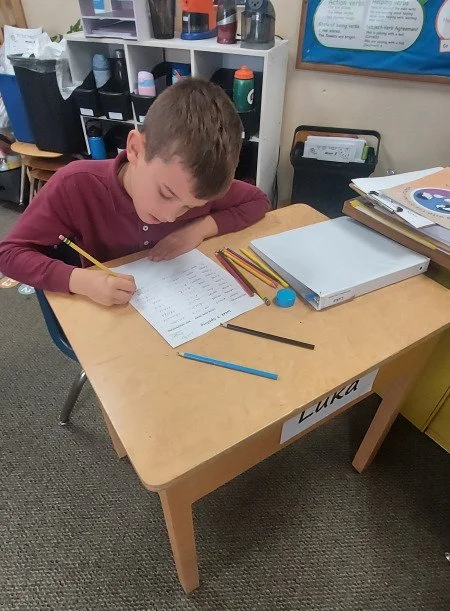
Luka demonstrating studious behavior
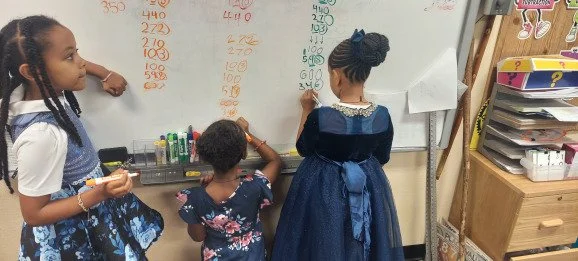
Yemar, Elaria, and Kabnat demonstrating a strong work ethic in math
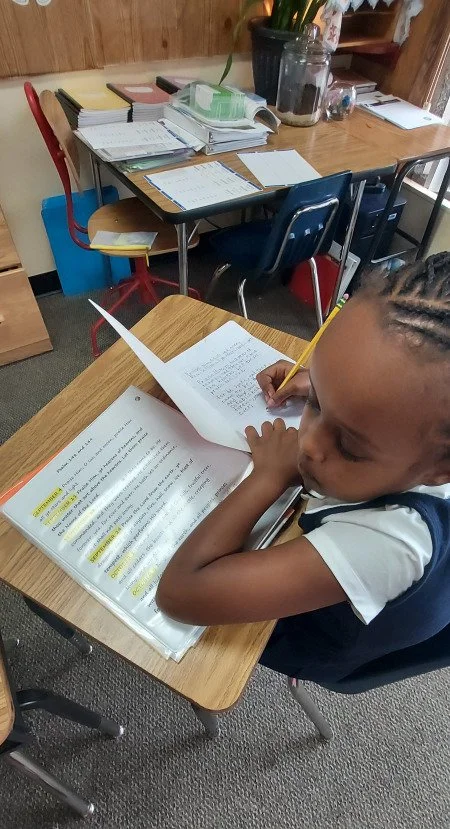
Elaria demonstrating studious behavior
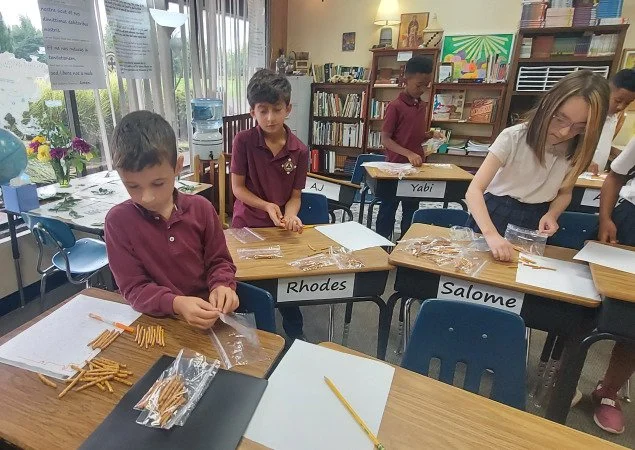
Place value with pretzel sticks
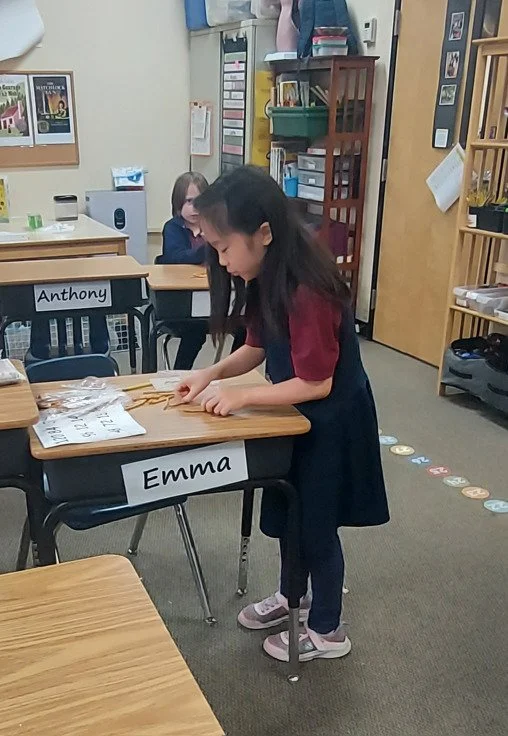
Emma’s strong work ethic bundling pretzel sticks in groups of 10
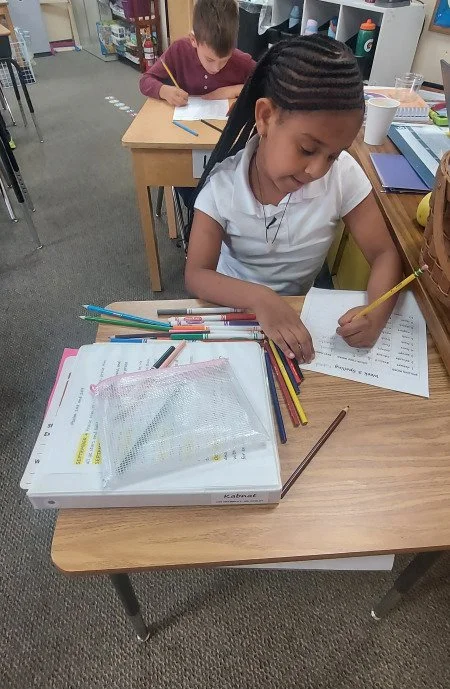
Kabnat working studiously
B-DAYS: Our Tuesday/Thursday Schedule and Academics
Whereas our A-Days are held within our classroom, our B-Days are quite varied, and students switch teachers until after lunch.
8:35 AM: Music
9:25 AM: P.E. (Gym)
10:15 AM: Library (Tuesdays) and Art (Thursdays)
11:05 AM: Theatre with Ms. Corazza
11:55 AM: Recess
12:25 PM: Lunch
1:00 PM: Latin
1:30 PM: Afternoon Break and Stretch
1:40 PM: Science
2:20 PM: Faith
On Tuesdays and Thursdays, we all learn collectively as one group.
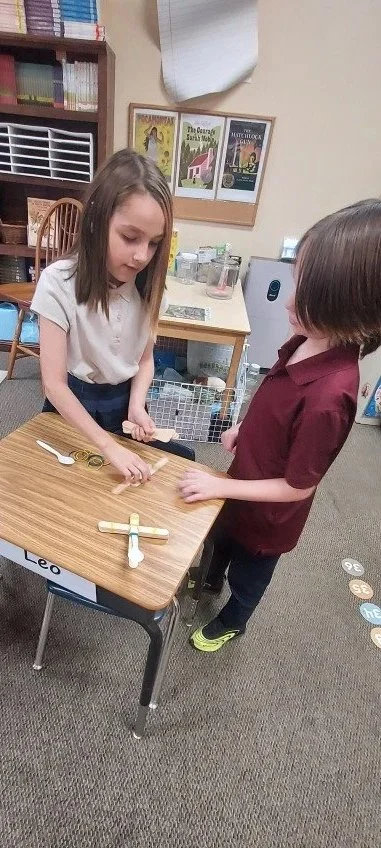
We are reviewing our Latin studies on Backyard Animals during our first quarter. This year in science we are studying physics. Energy is our first unit. Thus far, students have learned the difference between potential and kinetic energy using rubber bands, bouncy balls, and a mini catapult built with lab partners. They have also been introduced to the different forms of energy and have made a solar oven. This week we will be covering energy chains and renewable and nonrenewable energy sources.
Did you know that on the first of September, the Orthodox Church marks the new church year with an emphasis on stewardship? Every discussion we have regarding the use of energy can be directly related to honoring God by becoming conscientious stewards of Creation.
We have started a terrarium to help us understand the Creation of the world and to observe a biosphere of sorts. If your child has contributions, we are still looking to plant a tree of life in its center. Some have brought in moss. I am open to having little animals nest in the large jar: worms? Insects? Toads?
Additionally, during the first week of every month, we are keeping a nature journal to study Oregon. We have already sketched Oregon’s state flower (the Oregon grape), and next month we will focus on the state animal, the beaver. We will learn about how these species contribute to the biodiversity and wonder contained within this incredibly beautiful state.
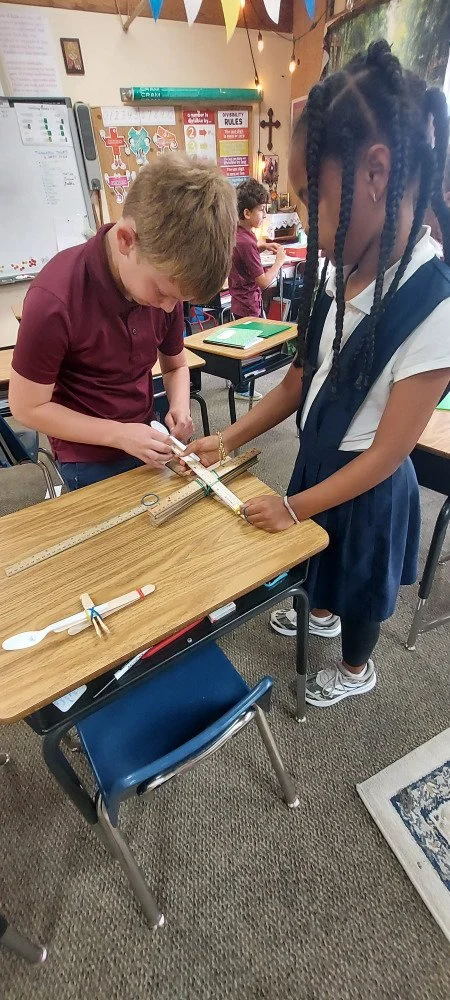
Anthony and Yemar as lab partners
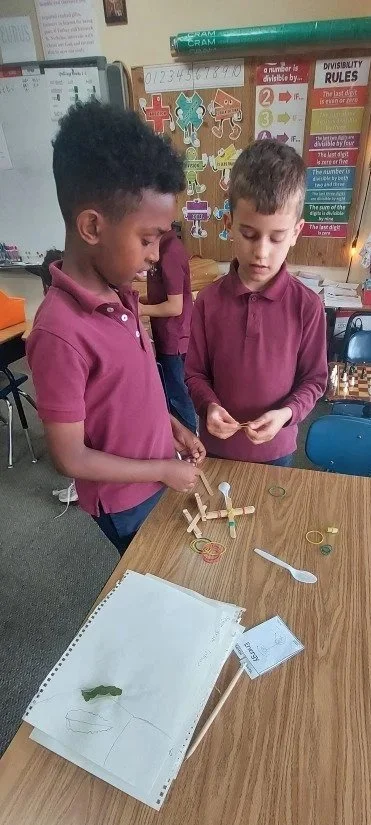
Yabi and Luka partnering to make a catapult
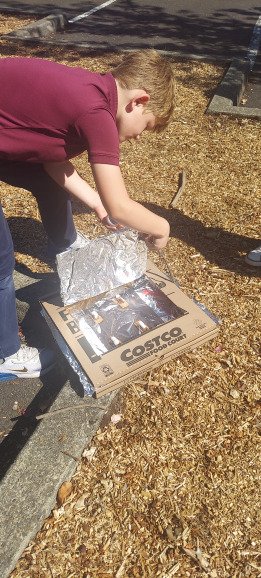
Anthony and Rhodes worked together to make the solar oven
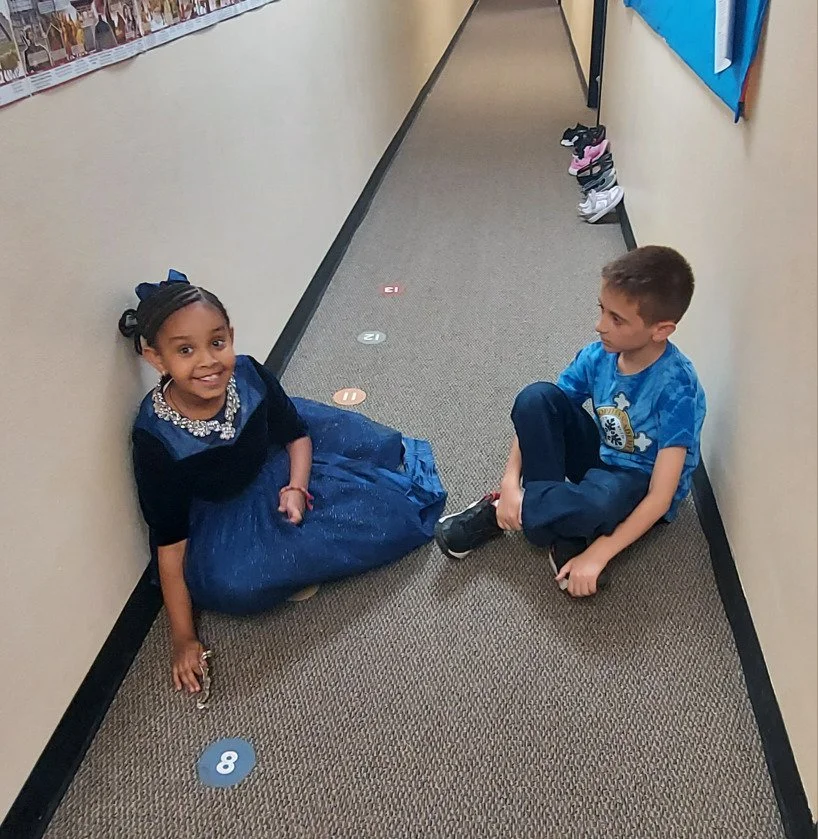
Kabnat and AJ teaming up to retell the fable “The Mouse and the Lion”
Weekly Goals
On your child’s weekly homework planner sheet, you will notice that we are reviewing Agia Sophia Academy’s School-Wide Learning Expectations.
Last week the children focused on “I demonstrate a strong work ethic and studious behavior and organize myself and my things well.” Instead of Ms. Cawley correcting them, we pointed to the expectation, and the children reflected on their choices and whether they aligned with our goal. It was great to see the kids adjust and begin to take ownership of a strong work ethic! Our row leaders help everyone maintain a tidy desk, as their row cannot be dismissed unless the desks are tidy.
This week our aim is “I take responsibility by solving problems on my own and asking for help when needed.” Children are learning what it means to use the resources at hand, such as a dictionary, rereading directions, and making a second or third attempt at a problem. They are very welcome to ask me for help if they have made a conscientious effort to see what they can do.
This has been very helpful in orienting the children toward building confidence in their growth. Further, today we read a book about persevering in our goals and attaching the word “yet” to internal thinking statements, such as: “I cannot do math rounding ... YET!”
In Liturgy, they are practicing making the sign of the Cross when they hear, “In the name of the Father, and the Son, and the Holy Spirit.” They have attended the liturgies so far with great respect. I will be delighted to send them in small groups to Montessori to help the younger children in October.
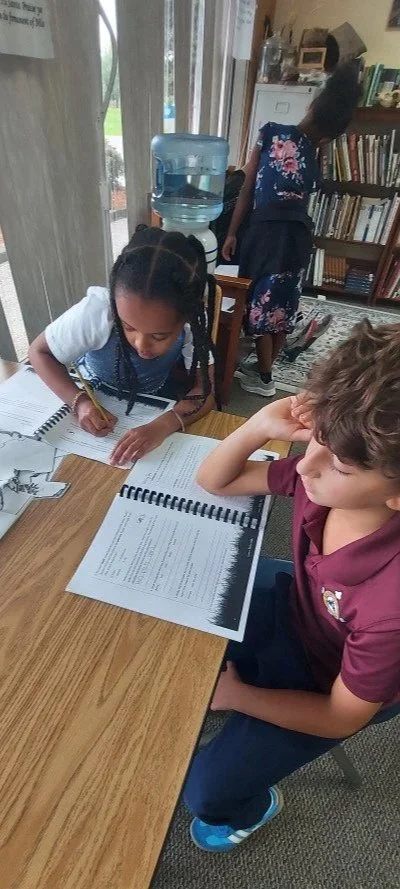
Yemar and Rhodes partnering during writing
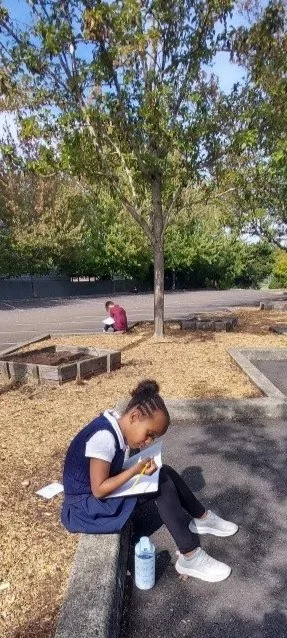
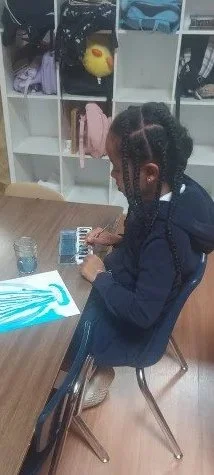
What Do I See? Elaria during Writers’ Symposium
Let me be St. Paisios’s bee and go straight for the nectar: this is one sweet, inquisitive, engaged group of learners. I am delighted to see how they turn toward instruction and are willing to grow. They are working hard to:
Stay organized! They are becoming more adept at using their binders, filing their papers in the correct color-coded folders, keeping their desks tidy, doing their in-class jobs with integrity, checking in to our classroom every morning with their binders, snacks, and water bottles, and generally working together so that we all are growing and learning. They are also practicing not speaking in imperatives to each other, but instead asking; keeping quiet in the halls and in our “silent” spaces; and remembering that the way to open Ms. Cawley’s ears is, “Excuse me, please, Ms. Cawley!”
Thanks to your prayers, the energy seems vibrant and bright! It is a joy to be with this crew of learners. Please do not hesitate to reach out if you have any questions or concerns. Please continue to pray for us and for Emma (whom we miss!) and Mrs. Mori, who are traveling at this time.
Kindly,
Christina Cawley
That is a general overview of our days.
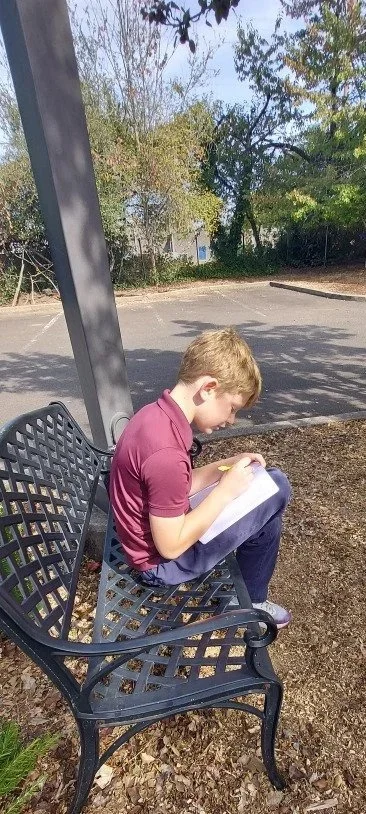
Anthony creating his story
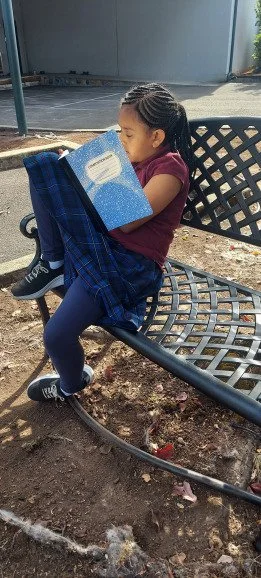
Future author, Kabnat
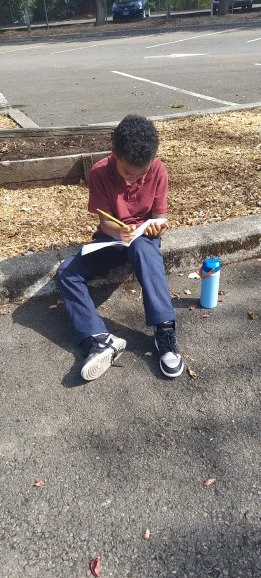
Yabi concentrating on his story
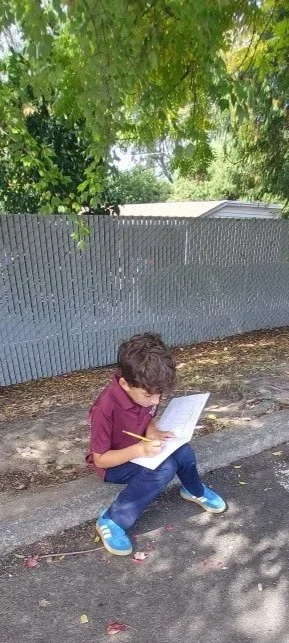
Rhodes focused on his story
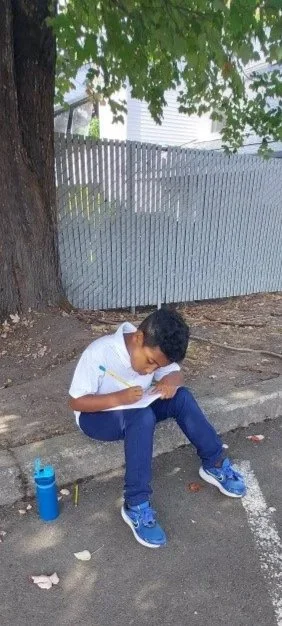
Aman invested in his ideas
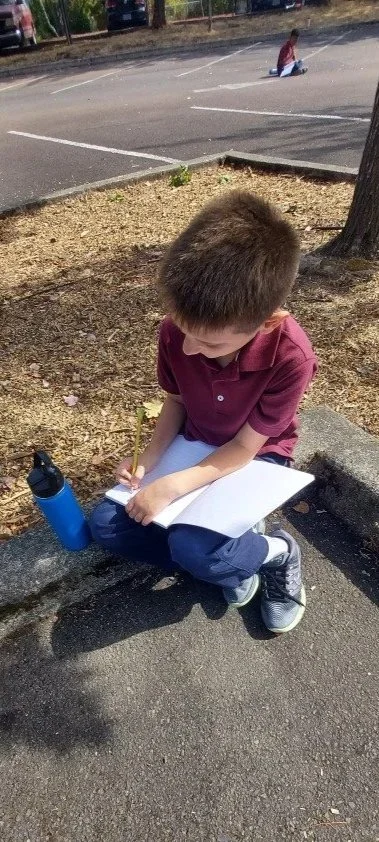
AJ coming up with something clever
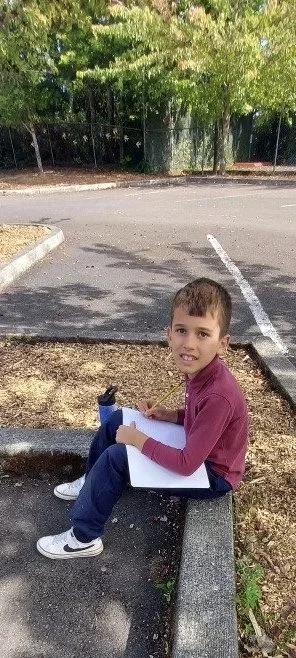
Future author, Luka
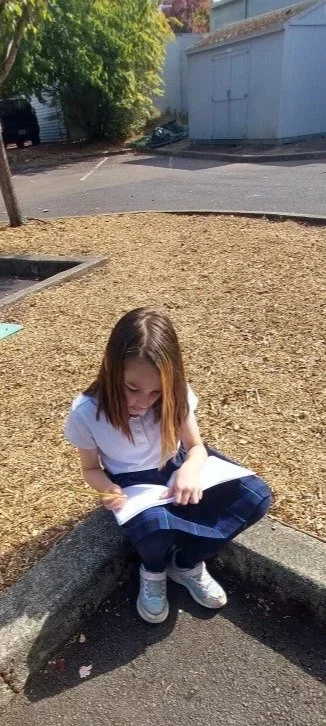
Author Salome, writing and writing!
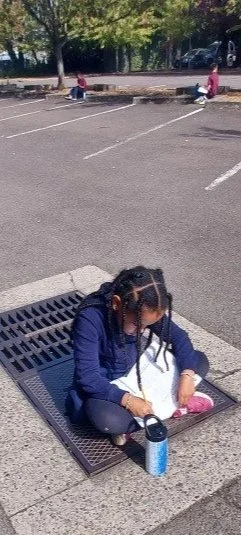
Yemar bringing her ideas to fruition
